
"coffee altitude"
38000 article(s) found

Cultivation of fine quality El Salvador Himalayan coffee beans, geographical location, climate, altitude
Central American countries generally distinguish quality grades by altitude, such as Costa Rica, Guatemala, Mexico, Honduras and other countries. Similarly, El Salvador is graded by altitude. At high altitudes, due to the cold climate and slow coffee growth, the density of raw beans will be higher, the hardness will be stronger, and the unique sour feeling of Arabica will be more.

Introduction of Grinding Calibration quality in low altitude Coffee Bean Flavor description treatment area
Low altitude coffee bean flavor description method grinding scale quality introduction to the production area simply speaking, the higher the altitude of the coffee bean growth, the better the taste. Coffee beans grown at high elevations have pleasant acidity, rich aroma and rich taste, which everyone likes; on the contrary, coffee grown at low elevations has almost no sour taste, single taste and plain taste. That's why.

Unique fragrance of Costa Rica Diamond Hill boutique coffee beans cultivation geographical location climate altitude
The higher the altitude, the better the coffee beans, not only because the higher altitude can increase the acidity of the coffee beans and thus increase the flavor, but also because the night temperature at the higher altitude is lower, which can make the trees grow slowly, thus the flavor of the coffee beans is stronger. In addition, due to the high altitude drop caused by sufficient rainfall, it is very beneficial to the growth of coffee trees. However, its negative effect is to increase

A brief introduction to the High-quality Costa Rican Coffee Manor Tarasu Coffee Bean Goddess Manor
Excellent Costa Rican coffee is called extra hard beans, and this kind of coffee can grow at an altitude of more than 1500 meters. Altitude has always been a problem for coffee growers. The higher the altitude, the better the coffee beans, not only because the higher altitude can increase the acidity of the coffee beans and thus increase the flavor, but also because the night temperature at the higher altitude is lower, which can make the trees grow slowly.

What effect does the altitude of coffee beans have on the flavor?
Effect of altitude on coffee beans in addition, in areas with low temperature, the leaf shape of coffee trees is larger than that in areas with high temperature, and the photosynthetic effect of large leaves is stronger than that of small leaves. In high altitude areas, the leaves of coffee trees are large, dark green in color and thick in wax. Due to little change in temperature throughout the year, the chances of summer leaves becoming smaller are small, while the nutrients produced by strong leaves can.

How does the origin and altitude of coffee affect your favorite coffee?
The information in the label of the coffee bag you buy may confuse you, and they may leave questions about altitude, deep roasting, light roasting, and their different flavors. Why is altitude so important? Once you understand the meaning of these descriptions, they can help you find and buy the coffee beans that best suit you.
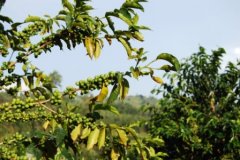
Why is the altitude of coffee plants so important?
Boutique coffee (specialty coffee) is also called specialty coffee selection coffee. It refers to coffee made from a small number of raw beans with excellent taste grown in an ideal geographical environment. Depending on the special soil and climatic conditions in which they grow, they have outstanding flavor. After strict selection and classification, this kind of coffee is hard in texture, rich in taste and stylish.

Introduction to the flavor description of Nicaraguan altitude coffee grinding scale variety production area treatment method
Nicaraguan altitude Coffee Flavor description Grinding scale Variety production area treatment method Taste introduces that all coffee grows in the tropics, in fact, altitude has no direct effect on coffee, but altitude can affect the growth, development and quality of coffee through the redistribution of meteorological elements (temperature, light, heat, wind speed, rainfall, etc.). The tropics between the Tropic of Cancer and the Tropic of Cancer

What is the reason for the higher the altitude, the better the quality of coffee beans?
The reason why coffee beans are planted at higher altitude and better quality is that the coffee beans with the best quality are usually strong and grow at an altitude of more than 4500 meters. The growth of these coffee beans is very slow, so the density of the beans is very high, and the gap in the middle of the beans should be curved. In contrast, coffee beans grown at low elevations usually have a lower density and slightly open gaps in the middle.

Description of Flavor of Coffee between altitude and acidity introduction of Grinding scale Variety producing area
Coffee altitude and acidity relationship Flavor description Grinding scale Variety production area although altitude is only one of the many factors to measure coffee quality, it is definitely the most important one. The next time you go to the coffee shop, please ask the barista to tell you the origin of the coffee in the cup, which will not only enrich your coffee knowledge, but also improve your overall coffee experience! Altitude will be directly shaded.

What is the effect of altitude on coffee flavor? Coffee bean flavor
The influence of geographical location on the flavor of coffee beans is profound. All coffee grows in the tropics, and the altitude at which it grows has a profound effect on the taste of coffee. The tropical belt extends from 30 degrees north latitude to the equatorial regions of the southern mountains that produce the world's truly high-quality Arabica coffee. Central and South America, South Asia and some Pacific islands, south-central Africa is also the most important in the world.

What are the advantages of high-altitude coffee beans? what's the difference in flavor?
What are the benefits of high-altitude coffee beans? what are the differences in flavor? 3000-6000 feet about 1000 meters to 2000 meters high altitude provides ideal conditions for coffee growth: an average annual frost-free climate of 60-70 degrees Fahrenheit, about 80 inches of moderate rainfall, and abundant sunshine. Coffee beans grow slowly in cold mountain areas, but the slow ripening process makes the sugar content of coffee beans.

Introduction to Guatemala Coffee Manor-Latisha Manor Fraijanes guatemala City
Like Costa Rica, El Salvador, Mexico, Honduras and other Central American countries, Guatemala is classified on the basis of altitude. Coffee produced at high altitudes is generally of higher quality than at lower altitudes, because the higher the altitude, the lower the temperature. At high altitudes, the slower the coffee grows, the more beneficial it is to the accumulation of good substances.

A brief introduction to the cultivation of fine Costa Rican coffee beans, geographical location, climate and altitude
Coffee and bananas are the country's main exports. Coffee was introduced into Costa Rica from Cuba in 1729. Today, its coffee industry is one of the well-organized industries in the world, with a yield of 1700 kg per hectare. Costa Rica, with a population of only 3.5 million, has 400 million coffee trees, and coffee exports account for 25 per cent of the country's total exports. Costa Rica has also benefited from

The altitude of coffee beans the difference between cocoa beans and coffee beans
The altitude of coffee beans the difference between cocoa beans and coffee beans simply put, the higher the altitude of coffee beans, the better the taste. Coffee beans grown at high elevations have pleasant acidity, rich aroma and rich taste, which everyone likes; on the contrary, coffee grown at low elevations has almost no sour taste, single taste and plain taste. That's why the coffee

The higher the altitude, the better the quality of coffee beans? what factors determine the hardness of coffee beans?
Pick up any bag of hand-baked specialty coffee and look at the label. You will notice that it tells you some information: the country and region of origin, the taste instructions for coffee beans, perhaps the name of the farm or roaster and, if it is a single origin, it will usually tell you its name. Altitude, measured in meters above sea level (masl). But it's practical.

A brief introduction to the method of flavor description and taste treatment of coffee produced at high altitude
Why Coffee Flavor is produced at High elevations; Central and South America, South Asia and some Pacific islands. South Central Africa is also the most important coffee growing area in the world. 3000-6000 ft (9-2000 m) high altitude provides ideal conditions for coffee growth: an average annual frost-free climate of 60-70 degrees Fahrenheit (15-21 ℃), about 80%
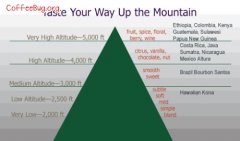
The relationship between altitude and Coffee Flavor
The influence of geographical location on the flavor of coffee beans is profound. All coffee grows in the tropics, and the altitude at which it grows has a profound effect on the taste of coffee. The tropical belt extends from 30 degrees north latitude to the equatorial regions of the southern mountains that produce the world's truly high-quality Arabica coffee. Central and South America, South Asia and some Pacific islands, south-central Africa is also the most important in the world.

The relationship between altitude and Coffee Flavor
The influence of geographical location on the flavor of coffee beans is profound. All coffee grows in the tropics, and the altitude at which it grows has a profound effect on the taste of coffee. The tropical belt extends from 30 degrees north latitude to the equatorial regions of the southern mountains that produce the world's truly high-quality Arabica coffee. Central and South America, South Asia and some Pacific islands, south-central Africa is also the most important in the world.

Effect of altitude on Coffee Flavor
The influence of geographical location on the flavor of coffee beans is profound. All coffee grows in the tropics, and the altitude at which it grows has a profound effect on the taste of coffee. The tropical belt extends from 30 degrees north latitude to the equatorial regions of the southern mountains that produce the world's truly high-quality Arabica coffee. Central and South America, South Asia and some Pacific islands, south-central Africa is also the most important in the world.